
Why are Meta Ads effective for hair transplant clinics?
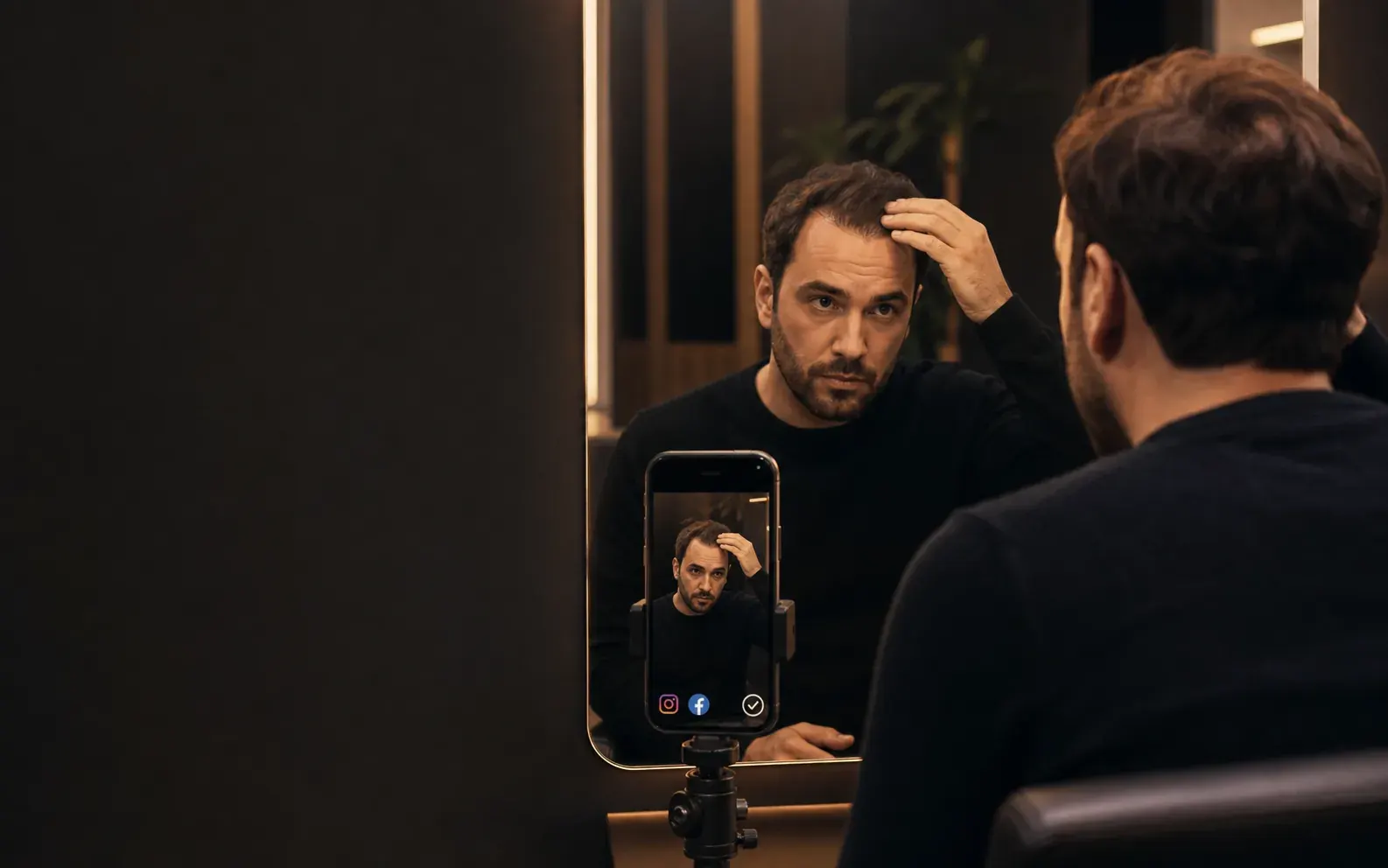
Instagram and Facebook offer a unique advantage in the hair transplant sector: before-and-after images and video content trigger passive users that search ads cannot reach. Even without an active search, it is possible to target audiences interested in hair loss with the right setup. For this reason, Meta Ads functions as a complementary channel to Google Ads: while Ads captures high intent, Meta fills the upper and mid layers of the conversion funnel with brand awareness and remarketing.
What should hair transplant Meta Ads creatives look like?
Hair transplant Meta creatives work in two main formats. Before-and-after carousel format has the highest engagement rate; a patient's facial expression and hairline transformation is a powerful emotional trigger. Short clip (15-30 sec Reels): clinic environment, doctor introduction or operation summary builds trust. Both formats must comply with Meta's approved healthcare advertising policy; exaggerated claims or guarantee-based copy lead to ad account suspension.
How is hair transplant Meta Ads targeting structured?
Core targeting layers: hair loss interest (engagement with hair care products, hair transplant content), lookalike audience creation from an existing patient list, geographic targeting (UK, Germany, Gulf countries, Turkish domestic market). Starting with broad audience and leaving it to Meta's automatic optimisation is also viable; this approach sometimes produces more efficient results than tight demographic targeting.
How is cost per appointment calculated in Meta Ads hair transplant campaigns?
Meta Ads hair transplant campaign costs are measured in two layers: cost per click (CPC) and cost per conversion (appointment or form fill). These costs vary by country in international segments; CPC in the UK and Germany typically ranges 0.8-2 USD while 1.5-3 USD is more common in the Gulf market. Conversion cost is directly linked to landing page quality and form process optimisation.
Which should be launched first — Google Ads or Meta Ads for hair transplant?
The ideal sequence for new clinics: start with Google Ads because high-intent searches produce faster, more predictable appointments. Launch Meta Ads in the second phase using traffic data and converted customer lists from Google Ads — this approach improves lookalike audience quality. If budget is limited, focus on Google Ads. When both channels run together, Meta remarketing campaigns are paired with Google Ads for full-funnel coverage.